
Stress is an inevitable and normal part of our lives, especially as we get older and our responsibilities grow and change. Since the beginning of time, stress responses have allowed us to react to life threatening situations accordingly to protect ourselves from danger and even death. In today’s modern world our schedules are often jammed packed with activities, work, deadlines, even social media portrayals and influencers that it can be very easy to become overwhelmed and experience an abundance of stress. Mental health issues are on the rise with little to no help and understanding of what can be done to manage and minimize symptoms. I for one can attest to the stress levels of being a mom, whether working or stay at home the expectations that fall on you as a mother, let alone being a woman. As a result and also speaking from personal experience, ignoring triggers of stress and allowing it to ‘work itself out’ can eventually lead to mental fatigue, mimicking if not coinciding with depression and anxiety as the stress continues to build up. Being in this state for an extended period of time projects towards others around you; family, friends, co-workers, etc. can interpret your outward symptoms as malice, hate, jealousy, anger, “bitchy/a-hole” behavior and so on. Even though these expressions may not be intentional, your chronic stress forces you to defend yourself from any situation your brain deems as dangerous or life threatening.
As mentioned, stress IS normal to an extent, but it is important to understand not only the physiological effects, but the physical effects of stress as well. Understanding the stages (General Adaptation Syndrome) that your body goes through when exposed to stress can help you become more aware of these physical signs when they occur. Having that awareness will allow you to better identify the sources of chronic stress and until you accept responsibility for the role you play in creating or maintaining stress, managing your stress levels will be outside of your control.
“What exactly is General Adaptation Syndrome?”
In short, General Adaptation Syndrome (GAS) are the stages that the body goes through when dealing with stress. The three stages are:
1. alarm reaction
2. resistance
3. exhaustion.
The alarm reaction prepares an individual to respond to a stressor, also know as the “fight or flight” response. During the resistance stage, the body tries to counteract the physiological changes during “fight or flight” and tries to get the body (heart rate and blood pressure) to return to normal. The final stage is the result if the stressor remains for an extended period of time and the body cannot return to normal, known as exhaustion. This physical response can cause a person to become irritable and have trouble focusing. In this stage the body is completely depleted and is no longer equipped to fight stress. Some common effects of this stage are shown in the image below and may come as no surprise but can also contribute to many health problems including but not limited to; high blood pressure, heart disease, obesity and diabetes.
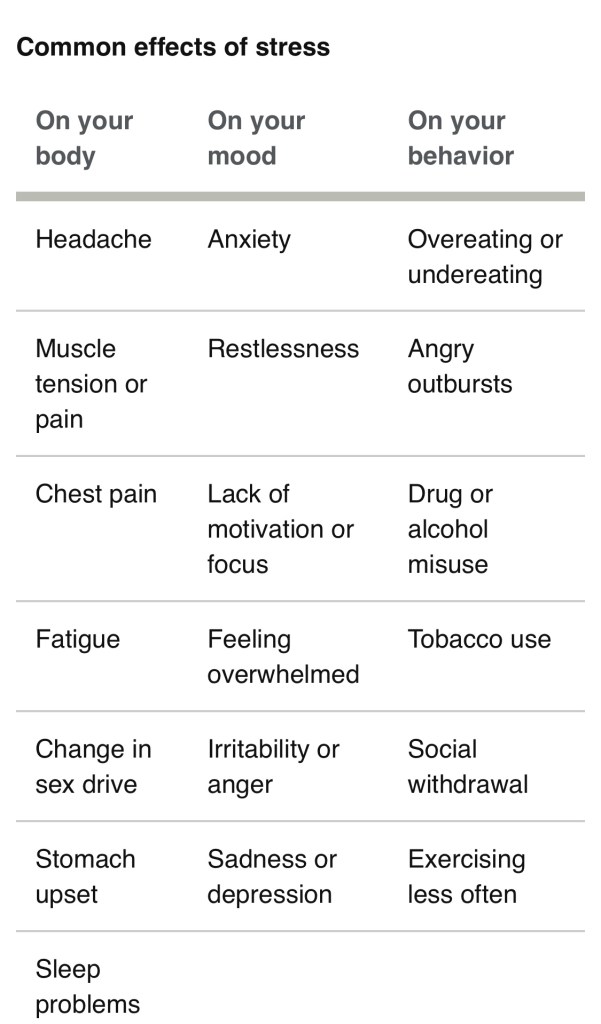
I recently asked close friends and social media followers some of the ways that they typically deal with or manage their stress. The most common of each were exercise and food (more specifically sugar). Simultaneously, while many understand the benefits of exercise as stress management, high stress also caused a decrease in regular exercise. So why is high stress leading to a decrease in personal hobbies that help us manage it? If the symptoms above weren’t enough to be a clear indicator of exhaustion, pushing aside your personal hobbies and activities should be the evident wake up call! If you’re putting exercise, yoga, running etc. on the back burner without finding alternate ways to manage, they you’re clearly at the opposite end of the road that you need to be on and as a result you allow yourself to be part of a vicious cycle that can either worsen or CREATE symptoms of anxiety and depression. Pair that with food/sugar/alcohol binging and you begin to see a trend and a reason why high blood pressure, heart disease, diabetes, and obesity are CHRONIC health issues in this country and some of the leading causes of death.
What are some things that you can do NOW to manage your stress? Taken from some of the suggestions given to me, along with learning to say “NO”, stress prevention was one of the BEST things you can do now. Start with identifying your triggers/stressors. BE SPECIFIC! Don’t automatically assume the obvious, for example “work is stressful”. What is it about work that is stressful? Maybe it’s not exactly the deadlines you have to make but your procrastination to meet those deadlines. Once you have identified those triggers, begin planning ways to avoid them. Do you forget until the last minute that you have an assignment due? PLAN PLAN PLAN! Write down EVERYTHING you need to do; errands, appointments, deadlines, practices, games, chores, and in addition to that PRIORITIZE your personal time! Set reminders, look at your calendar and find ways to fit in exercise and other activities and hobbies you enjoy!
One thing I learned and found to be quite upsetting is that many adults don’t even have one. single. hobby. They are coming home and relying on food and screen time for comfort and relaxation. Let me be the first to say, I do enjoy a good beer after a long week and LOVE to eat, but when used as means to cope with stress the effects can yield long term health problems. Don’t be afraid to try something NEW! Try meditation/yoga, talk to a therapist in a safe, judgement free environment that allows you to express yourself. Go for a RUN! Trust me, no one runs because it’s easy but I promise you that the place your mind goes to when you run (for at least 20 minutes) is worth the temporary physical discomfort. READ a book! Again, 20 minutes is very manageable even for the busiest schedules. Go for a HIKE, a WALK, just get outside! Bring out your CRAFTY side! You may not think you’re great at it but finding ways to be creative (paint nights, doodling with your kids, pottery classes, etc) are great ways to exercise the mind. Find ways to be social! Join a club, team, a FREE running group (I know some great ones) or take a class! Finding ways to socialize outside of work can help prevent discussing stressful work topics outside of the office. Go to bed early, try to get some uninterrupted SLEEP. Avoid being on the phone or in front of a screen 45 mins to an hour before bed. Sleep is highly underrated and one thing we don’t get enough of yet NEED for our bodies to recover mentally and physically. And most importantly, DON’T GIVE UP ON YOURSELF! I hope knowing what you know now will encourage you to find healthy ways to manage stress. It doesn’t have to be excessive and it shouldn’t be all at once. Pick one healthy habit each day and be consistent. Remember, only once you accept and remember that your stress is temporary can you begin to decide how your’e going to manage it.
- helpguide.org Lawrence Robinson, Melinda Smith, M.A., and Robert Segal, M.A.
- https:/adaa.org/understanding-anxiety/relatedillnesses
- mayoclinic.org/healthylifestyle/stress-management/in-depth/stress-symptoms/
 AiRow Health & Fitness